

🎁 Perplexity PRO offert
PrestaShop vs Sylius: From Module to Product, What if the Future is Hybrid?
Introduction – When a Simple Module Raises a Real Question About the Future
Picture this. You’re working on a classic PrestaShop project. The client asks for something very simple: “I want to display a customizable message in the site header, configurable from the back-office.”
Nothing revolutionary.
A PrestaShop module, a displayHeader hook, a configuration field, a Smarty template… job done.
And yet.
If we step back a bit, this “little module” raises a much broader question: how do we design an e-commerce feature today… and especially tomorrow.
With the convergence between PrestaShop and Sylius, we’re no longer just facing a choice of tools. We’re facing two development cultures that are looking at each other, comparing themselves, and potentially… complementing each other.
👉 In this article, I offer you a concrete analysis:
- how this module would be designed on the PrestaShop side
- how the same idea would be approached on the Sylius side
- what each approach does very well
- and above all, why the future of e-commerce will very likely follow a hybrid model
Part 1 – Context & Challenge: Two Worlds Converging
For a long time, the landscape was clear:
- PrestaShop = an e-commerce CMS focused on time-to-market, modules, hooks, efficiency.
- Sylius = an e-commerce framework based on Symfony, focused on architecture, customization, and scalability.
Two different philosophies. Two sometimes distinct audiences.
And then, the convergence happened.
It’s not just a financial or strategic operation. It’s a strong signal sent to the ecosystem:
E-commerce can no longer be just “quick to install” or “perfectly architected”. It must be both.
Today’s challenge is no longer just knowing how to add a feature, but how it will evolve over time.
A message in the header today. A contextualized message tomorrow. Then rules, segments, AI, omnichannel.
That’s where the comparison gets interesting.
Part 2 – Analysis: Same Need, Two Ways of Thinking
🧩 PrestaShop Side: The “Module + Hook” Reflex
In the PrestaShop universe, the answer is almost instinctive:
- Create a module
- Add a configuration page in the back-office
- Save the message via
Configuration::updateValue() - Inject rendering via a hook (
displayHeader) - Display in a Smarty template
This model is extremely powerful.
Why?
- ✅ Fast to develop
- ✅ Easy to maintain for simple needs
- ✅ Perfectly integrated into the PrestaShop ecosystem
- ✅ Understandable by the majority of developers and merchants
It’s an approach focused on immediate functionality. You add behavior to an existing system.
And for 80% of e-commerce needs… it’s exactly what’s needed.
🧩 Sylius Side: Thinking “Feature”, Not “Module”
With Sylius, the reasoning changes.
We no longer really talk about “module”, but about:
- Sylius Plugin / Symfony Bundle
- Business service
- Doctrine Entity to store data
- Symfony Form for administration
- Twig, Event, or API to expose functionality
In other words:
You don’t “plug in” a feature, you build it as a product.
The advantages are clear:
- 🧠 Clean and testable architecture
- 🔌 Extensible (rules, permissions, multi-channel)
- 🌐 API-first / headless ready
- 📈 Scalable from conception
However, it’s more demanding:
- more decisions to make
- more structure
- more time upfront
But also much more freedom in the long term.
Part 3 – Concrete Case: Same Need, Two Implementations
Let’s take our very simple example: a message displayed in the header.
PrestaShop Implementation
Typical workflow:
- The merchant enters their message in the module’s BO
- The text is stored in configuration
- The
displayHeaderhook injects the HTML - The theme displays it
➡️ Simple. Effective. Perfect for a global need.
Sylius Implementation
Same need, different approach:
- Create a Message entity (content, language, channel, dates)
- Admin interface via Symfony Form
-
Expose the message via:
- a Twig block on the storefront side
- or an API consumed by a headless front
-
Ability to add:
- display rules
- customer segmentation
- A/B testing
➡️ Longer to set up, but much more scalable.
Part 4 – What if the Real Future is a Mix of Both?
This is where things get exciting.
The future of e-commerce will probably be neither 100% “classic” PrestaShop, nor 100% “from scratch” Sylius.
It will be hybrid.
🚀 The Best of Both Worlds
-
PrestaShop for:
- speed
- standard needs
- ready-to-use product logic
-
Sylius / Symfony for:
- strategic features
- complex workflows
- AI, automation, omnichannel
Imagine:
- a simple PrestaShop module on the facade
- connected to a more robust service-side brick
- powered by automation (n8n), AI, business rules
We move from module to intelligent feature.
Conclusion – The Module is No Longer an End, It’s a Starting Point
A message in the header is never just a message.
It’s a pretext to think about:
- how we design our features
- how they will evolve
- and what role we, as developers, will play tomorrow
The future won’t be made of developers who stack hooks. Nor architecture purists disconnected from reality.
👉 The future belongs to those who know how to orchestrate: tools, frameworks, AI, automation.
And you, your next module… is it just “functional”, or already designed as a building block for the future?
Articles Liés
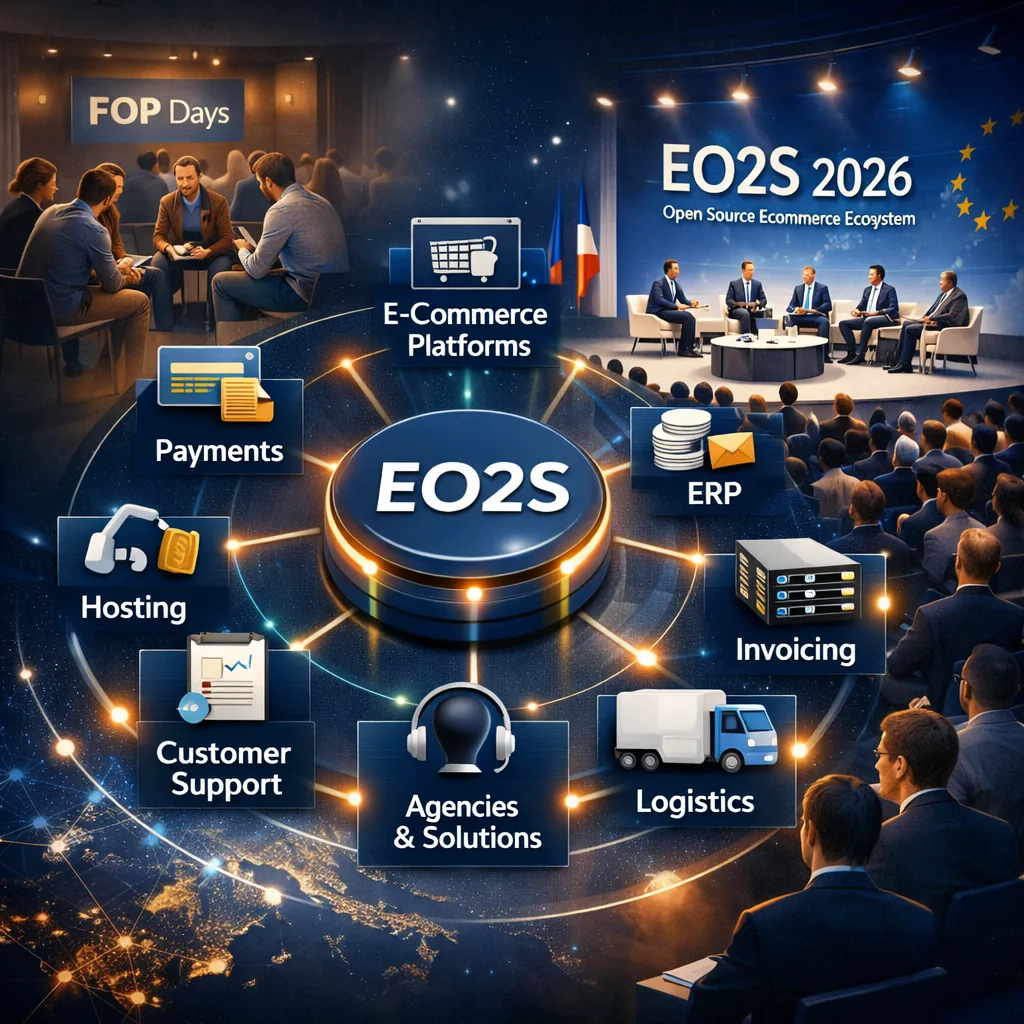
EO2S 2026 : Sommet E-commerce Open Source — 26 mars Paris
EO2S 2026 — Sommet e-commerce open source le 26 mars à Paris : PrestaShop + Sylius, Baromètre CMS, facturation électr...

Gouvernance IA dans PrestaShop : le cadre stratégique indispensable en 2026
En 2026, intégrer l'IA dans PrestaShop ne signifie pas abandonner le contrôle. Découvrez le cadre complet de gouverna...
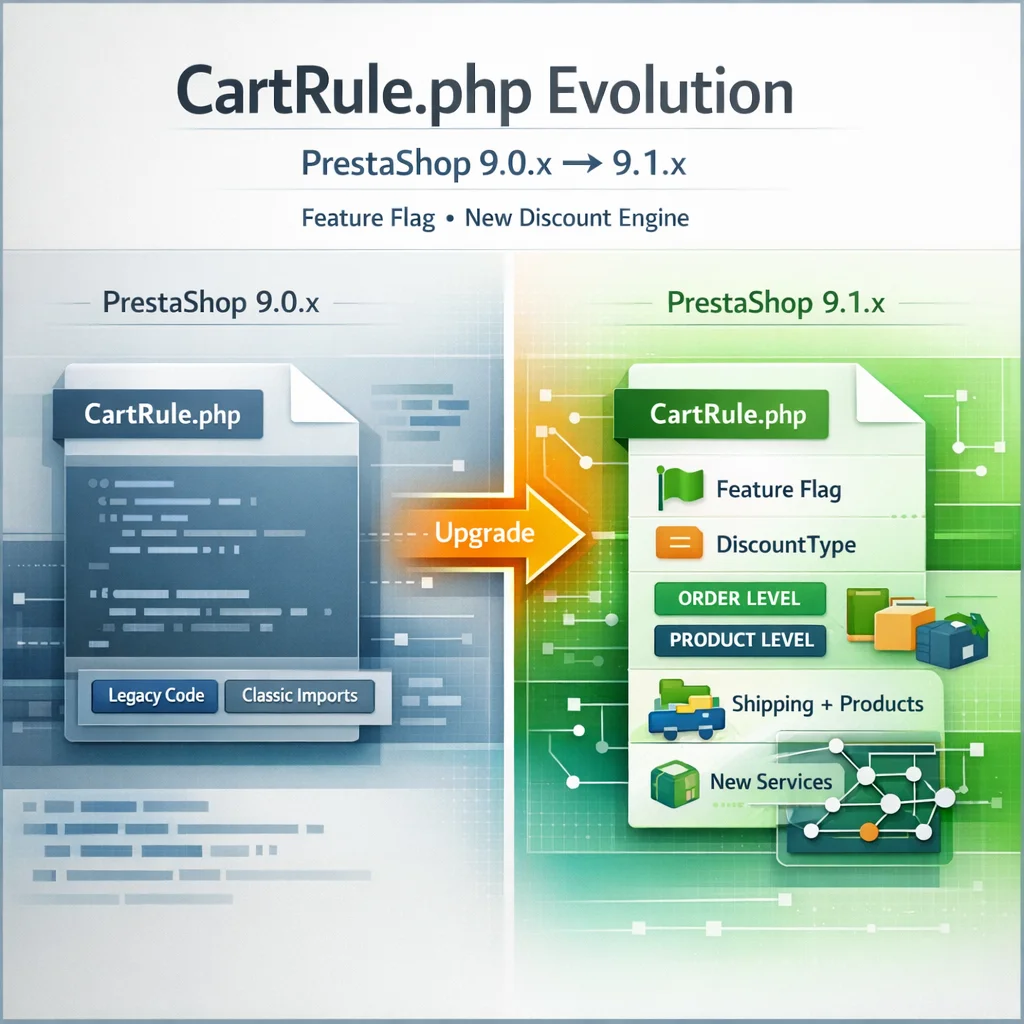
Évolution de CartRule.php : PrestaShop 9.0.x → 9.1.x
Analyse technique complète de l'évolution de CartRule.php entre PrestaShop 9.0.x et 9.1.x. Découvrez le nouveau systè...

Comment le vibecoding détruit l'open source qui le nourrit
Le vibecoding repose entièrement sur l'open source, mais il est en train de le tuer. Chute des contributions, mainten...
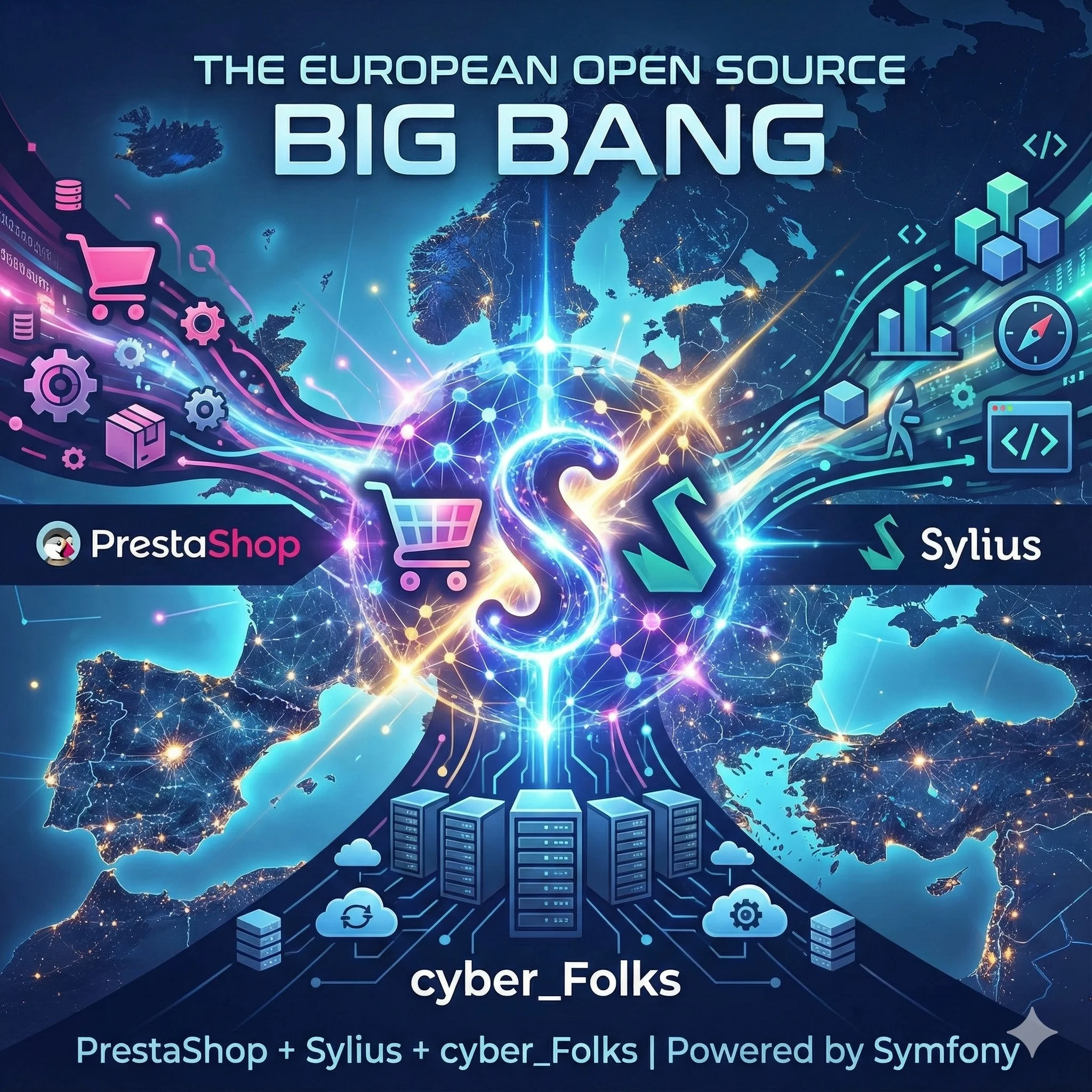
💥 PrestaShop + Sylius : Le Big Bang de l'Open Source Européen
L'acquisition qui change tout : PrestaShop rejoint cyber_Folks et Sylius. 31 milliards d'€ de GMV, 240 000 boutiques,...

GEO pour e-commercants : comment j'ai optimise une fiche produit pour apparaitre dans les reponses de ChatGPT, Gemini et Perplexity
Un cas pratique step-by-step : comment j'ai fait passer une fiche produit PrestaShop de 0 a 14 mentions dans les repo...
Découvrez mes autres articles
Guides e-commerce, tutoriels PrestaShop et bonnes pratiques pour développeurs
Voir tous les articles